
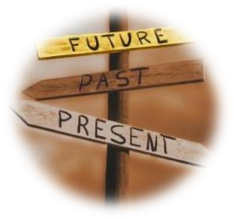
One can never go back. Time moves forward, and so must we; therefore, whatever moment is left behind is suspended action – the final glimpse of the present in passing, the beginning of that which is vaguely referred to as the past, never recaptured, never relived, only remembered. It is like the ruins of Pompeii, buried beneath the ashes of the present, brought to the surface by a moment of discovery in an anxious attempt to recapture its reality indelibly, but left to lie – a silent, wind-swept monument of death resurrected. The past is merely the present at its moment of passing.
As I wind my way along narrow country roads, I am enchanted by the magnificent trees, resplendent in their colorful Fall finery and profusely interspersed with majestic evergreens, so characteristic of the mountains of Western New York State. Upon arriving in the modest town of Caneadea, my heart begins to skip a beat. I am filled with expectancy, for I know that around the bend I will enter the village of Houghton, home to Houghton Academy and Houghton College. Not only did I live there as a child while my father, a World War II veteran, finished his last two years of high school and his first two years of college, but at the age of twelve, I returned to Houghton Academy as a boarding student, where I spent two valuable yet poignant years.
I wonder if the town has witnessed much change. My question is answered as I halt in front of the old two-room schoolhouse where I had accomplished the first three years of elementary education. I remember the cheerful ring of the school bell, calling the children from all corners of the town, and I hear the rapid snap of heels along hardened dirt paths again. At the same time, the distant echo of affectionate giggles projects friendly faces against the recesses of my mind. Amid the colorful dampness of a fall rain, overwhelmed by visions of similar past days, I stand humbly before the ghostly appearance of aging decay. The boarded windows and padlocked doors whisper silently of seasons surpassed by progress and technology. I wonder silently if the same is happening to me.
I approached what had been the Academy Building—a center, classrooms, and a post office for campus students. The stillness of the empty rooms strikes me. Where there was laughter and sharing, silence remains. I peek into the room where students met each morning for chapel, each Tuesday night for prayer. I spent many arduous practice sessions there as a member of the skilled, twenty-voice A Cappella Chorale. It is the same room, but diminished by reality. The pungent odor of wood polish permeates the vacant classrooms. The old oaken hallways shine with wax. My steps reverberate as I withdraw from the century-old halls, lined with oil paintings of revered faculty—many I once loved, now forgotten.
Outside, the bell is resounding from the new Chapel-Auditorium, reclaiming me to the present. The newness of that building is an act of irreverence that forcefully intrudes upon the sanctuary of my treasured memories, yet today, I have touched upon many vital moments of a time long ago. My most significant discovery, however, is the realization that in retracing steps of yesterday, I have, instead, shaped new ones for today, and they, in their own turn, will one day be remembered as the past.
©Pamella A. Russell, 2026